Scottish Archer, 14th Century.
By the twelfth century the ability to call on wider bodies of men for major campaigns had become formalised as the "common" or "Scottish army", based on a universal obligation linked to the holding of variously named units of land.[18] This could be used to produce a regional army, as the future Robert I did when from 1298–1302 when, as Earl of Carrick, he raised "my army of Carrick", but also a national Scottish army, as he did later in the Wars of Independence. Later decrees indicated that the common army was a levy of all able-bodied freemen aged between 16 and 60, with 8-days warning. Scottish archers were mainly drawn from the border regions, with those from Selkirk Forest gaining a particularly reputation. They became much sought after as mercenaries in French armies of the fifteenth century, in order to help counter the English superiority in this arm, becoming a major element of the French royal guards as the Garde Écossaise.
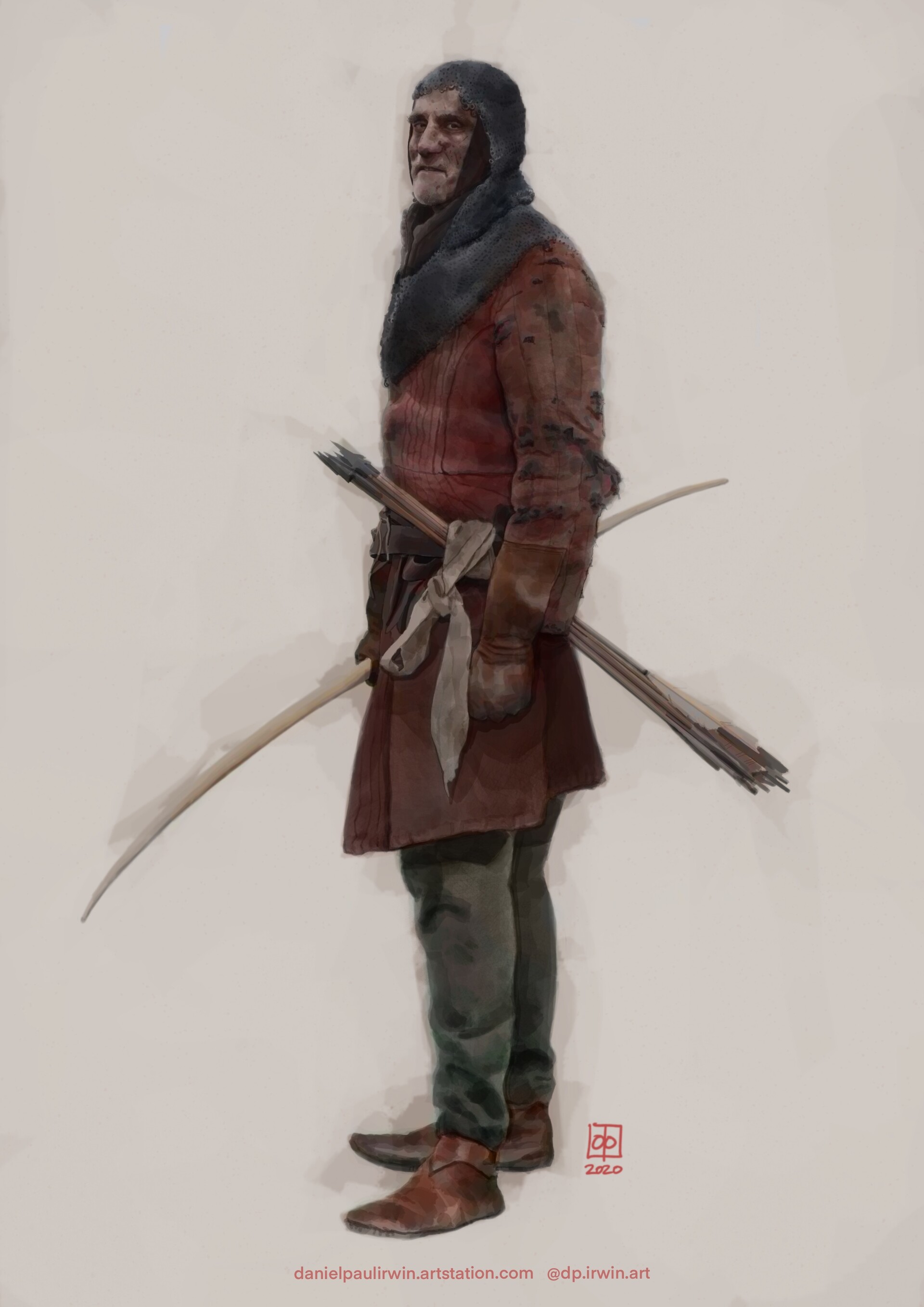
Scottish Archer, 14th Century.

Scottish Archer, 14th Century (Grey-scale).

Detail.

Detail.